

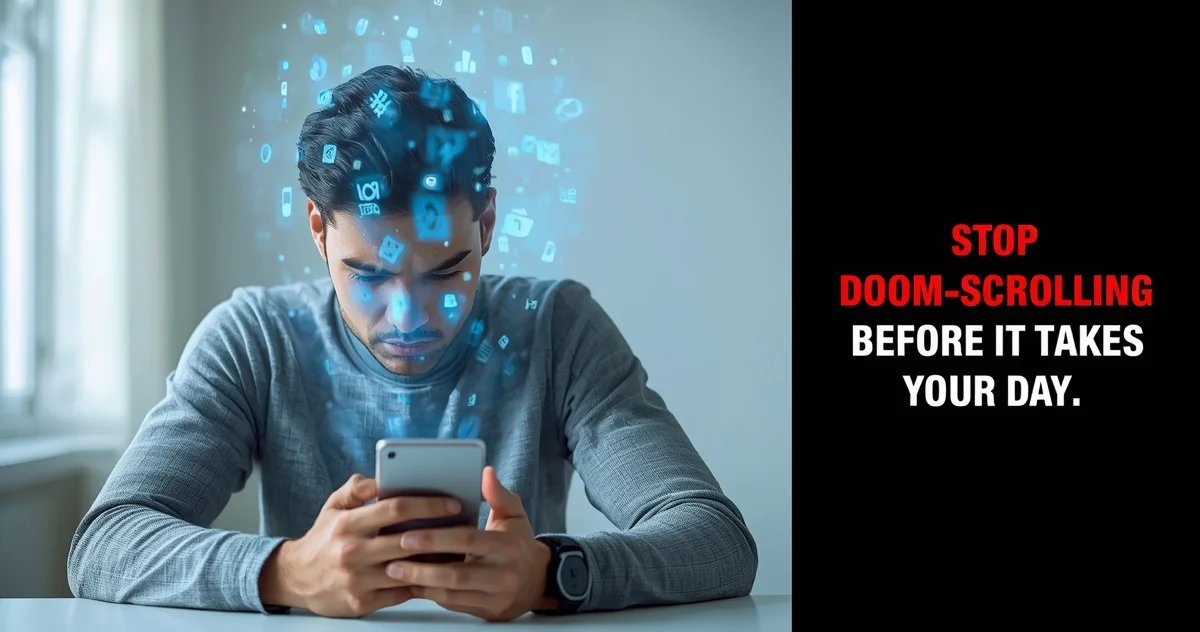

What if your phone stays locked in the morning… until you move your body. Strange idea, right? But now think about your current day. Alarm rings and before your head even lifts from the pillow, your hand already reaches for the screen. Scroll… notifications… short videos… messages… all before you even brush your teeth.
Oh too much toxicity just after wake up. Now picture a new rule in your life: You need 1000 walk steps to gain 1 hour of screen time. With this, your mornings shift in a big way. Your mind wakes up slowly, not with noise. You step outside, feel the air, hear tiny sounds you never noticed earlier.
Your day starts with movement before screen, not screen before life. And suddenly you feel different – in your body, in your thoughts, in your heart, even in your daily money habits.
This blog gently shows how to reduce screen time and how these tiny choices change life physically, mentally, emotionally, spiritually and financially.
TOC
- 1 Why This Rule Hits You So Deep?
- 2 The Science Behind Moving Before Scrolling
- 3 How Your Daily Routine Transforms
- 4 Moments That Make You Say “Oh yes, this is me”
- 5 The Shocking Benefits You Feel Within 15 Days
- 6 This Chart Shows What Our Phones Are Doing to Our Minds
- 7 When You Hold the Power, Not the Screen
- 8 How to Reduce Social Media Time
- 9 10 Step Challenges You Can Try
- 10 Conclusion
Why This Rule Hits You So Deep?
Daily Movement Feels Natural Now
When you connect your screen time to your steps, your body gets some movement every single day. It does not feel like a workout. It feels like part of life — like walking to buy milk, taking stairs or going out to breathe for two minutes. Your mind wakes up faster, your legs feel active and your day starts smoother. You even notice how the benefits of walking daily show up in tiny ways like better focus and steadier energy.
Screens become rewards, not addictions
When you know you need steps first, your phone suddenly stops pulling you like before. You earn that time. It feels more special. You scroll less and you enjoy more. This shift quietly helps you reduce phone addiction because the rule makes your mind wait, slow down and choose better. Your screen becomes something you enjoy at the right moment, not something that controls your whole day.
Every Hour Starts To Matter More
When you walk first and screen later, you notice how your time feels different. You start planning your day better. You get things done earlier. You feel more in control of your hours. Even ten minutes of fresh air can reset your head and make you think – Okay now I can use my phone. It makes each minute feel earned, not wasted.
You Listen Better, Talk Better, Connect Better
When your mind is not tired from nonstop scrolling, you talk better with people. You hear more. You respond better. Even small talks with parents, friends or coworkers feel real. You smile more. You notice the person in front of you instead of checking your phone again and again. This comes naturally when your day starts with steps, not screens.
Mini Negatives (Light ones)
Some days you feel like grabbing your phone first. And then you remember the rule. It feels a little annoying. But this tiny tension is what breaks old habits and builds new ones. It gets easier day by day.
On very packed days, you might feel a bit of rush to finish your steps. It may feel like extra work. But even short walks — like going downstairs or walking inside your room — help you stay on track.
Rain, heat or cold might interrupt your outdoor walks. But small indoor steps, terrace walks or even walking while talking on a call help you complete your count. The goal is movement, not perfection.
The Science Behind Moving Before Scrolling
Your Brain Wakes Up When Your Body Moves
When you walk even a little, your brain gets fresh blood flow. It releases feel good or happiness chemicals like dopamine and serotonin. These signals lift your mood in a soft way and make your mind feel more awake. It is the same reason many people say they think better during small walks. This is where walking for mental health feels very real, even for short distances.
Walking Calms Your Mind Gently
When your legs move – your body sends a message to your brain that you are safe and active. This slowly reduces anxious thoughts that stay stuck when you sit for long hours. Even a 10 minute walk can cool down your mind after a tough moment. It also helps your brain settle after long screen hours which makes physical activity for stress relief feel natural in daily life.
Steps Help You Break “Scroll First” Habit
When you walk first, your mind gets a small reset. That reset makes you less hungry for endless scrolling. Your thumb does not rush straight to reels or news. You feel more in control of your screen, not pulled by it. This shift slowly helps you build healthy habits, because your brain learns to wait before jumping into screens.
Your Energy Stays Steady When You Walk Daily
Walking keeps your energy line stable through the day. You feel less tired in the afternoon and more awake in the early hours. Your body likes this rhythm and your mind follows. This small change builds a long term shift in your mood and thinking making it a true healthy habit transformation for everyday life.
How Your Daily Routine Transforms
Your Mornings
When you wake up now, your hand does not rush to the phone. You pick your shoes first. Your first goal is small and easy — walk a bit and then you unlock screens. After 1000 steps, you feel you earned that first hour. Your head feels light, not full. Sunlight, coffee and a walk replace bed scrolling. This slow shift feels like behaviour change through walking where your mood stays steady and your morning stays gentle.
Your Work Rhythm
Your day feels lighter when you mix small walks with work. You take 500 steps after lunch, then maybe 200 before a meeting. These tiny breaks replace old screen breaks. You feel less sleepy and your head stays more awake. Each short walk gives your brain a small reset, so you think faster and stay calmer. This small habit feels like a soft dopamine detox that pushes your work flow in a better way.
Your Relationships
You spend fewer empty hours on reels, so your mind stays more present with people. You look at faces more, not screens. Conversations feel warmer because you actually listen. Many people even start walking with their partner or family and those short walks turn into quiet bonding moments. A tiny negative is that sometimes you may want to finish your steps alone but it stays easy to handle. This small change slowly improves digital wellness for everyone around you.
Your Mental Health
You slowly switch from phone dopamine to real dopamine that comes from movement. Your body feels lighter and your mind feels less crowded. Anxiety lowers because walks help release extra thoughts. You also feel proud each day, because you “earned” your screen time with real effort. This pride grows like a soft power inside you. Step by step, your mind feels calmer and more steady.
Your Evenings
Your evenings take a new turn. Instead of lying on the bed and binge – watching till late, you check your steps first. Then you plan how much screen time you want. A short walk after dinner helps your stomach settle and it helps your mind slow down too. You sleep earlier, scroll less and feel fewer late night looping thoughts. Your night feels lighter and more gentle.
Your Sleep Cycle
When the phone stays away before bed, your sleep goes deeper. Your steps reduce restlessness, tired thoughts and that heavy feeling in the head. You fall asleep faster because your body already finished its energy in a healthy way. By morning, you wake up fresher and more organised in your mind. You feel ready, not rushed. One small routine change starts fixing your whole cycle.
Your Self Respect
This habit quietly changes how you see yourself. You start trusting your own word again. When you walk first and scroll later, your discipline feels like a part of who you are, not a rule forced on you. You feel more steady, more awake in life. Every day you take steps – you feel like you are slowly becoming the person you always wanted to be.
Moments That Make You Say “Oh yes, this is me”
Serial Episode Moment
You plan to watch your favourite serial at night, but the app opens only when your step count is completed. You check the updated steps count and see you still have 500 steps left. For a second you feel like skipping it but then you think – let me end this now. You walk around your room, balcony or hallway for just six minutes. Steps finish fast. Now you sit down, open your serial and feel light inside. No regret. No guilt. Your screen time feels earned and not forced.
The After Office Craving
You reach home after a long day, body tired and mind heavy. You want just 20 minutes of scrolling to relax a bit. Then you check your steps and see only 200 left. It feels like nothing, so you walk inside your hall or corridor. Your legs open up, your head feels lighter and your mood lifts fast. After this short walk, you sit down with your phone. Now the scroll feels earned, calm and guilt free. The day ends with relief instead of pressure.
Weekend Binge Drama
Weekend nights feel perfect for long episodes or movies. Earlier, you would drop on the sofa and start watching straight away. Now you make a small rule for yourself: let me finish my steps before I start my show tonight. So in the evening, after tea or after a light walk outside, you complete your steps slowly. You feel awake and lighter, not sleepy or dull. When you finally sit to watch your weekend drama, it feels earned — and again the guilt completely disappears.
Family Time Unlocks Naturally
Earlier, everyone sat with their phones after dinner. Now you all go for a short walk outside — maybe 10 minutes. Kids talk about school. Parents share small stories. Someone jokes. Someone laughs. Even the silence feels warm. That little walk brings real connection that screens never gave. Later, when you all pick up your phones, it feels planned, not random. Family moments come first, screens come later. And honestly, that tiny change feels stronger than any long lecture.
The Low Mood Day
Some days you wake up low. No energy, no excitement, nothing feels right. In those moments, scrolling usually makes things worse. Now you check your steps and decide to walk a little. First 200 steps feel slow. By 300, your breathing settles. By 800, something shifts — your chest feels lighter, your head clears and your eyes open up. You realise the truth: the screen never fixed your mood. Your movement did. And that one small walk feels like a small win you needed.
The Shocking Benefits You Feel Within 15 Days
- More energy
- Less random scrolling
- Weight loss
- Better posture
- Clear mind in mornings
- Mood stability
- Better conversations
- You stop comparing yourself to others online
- You stop doom scrolling or binge watching late night
- Steps become your new coping mechanism
- Small negative: few days of laziness in early stage (normal and temporary)
This Chart Shows What Our Phones Are Doing to Our Minds
Mental Health Trend
Outer Ring: Avg Daily Screen Time ↑ from 2.5 hrs to 5.6 hrs
Inner Ring: Depression Trend ↑ from 3.6% to 6.1%
Pew Research Digital Use Study.
When You Hold the Power, Not the Screen

Right now, screens control us
Right now, screens pull us in. One small tap turns into hours. We all say – Just two minutes, but somehow it becomes long scrolling, long reels, long chats. This rule changes that. You walk first, then you earn your screen hour. Slowly, your mind learns that you choose when the screen enters your day. This soft change helps you reduce screen time in a gentle way that feels easy on your mind.
You are the controller now
When you follow this rule, the screen waits for you. You stop running to your phone the moment a reel pops up or a notification buzzes. You finish your steps first, then you open the screen. This small act flips your daily pattern. You train your mind to notice your body first, not your phone. Over time, this becomes your normal habit and you feel more free in your day.
You become the driver, not the passenger
Earlier, the phone took you everywhere — random videos, random posts, random thoughts. You just followed. Now your story flips. You walk, you breathe, you think – then you choose what you want to see. You sit in the driver seat. You decide when to start and when to stop. This shift feels gentle but strong and it helps build real control over your screen hours in a natural way.
How to Reduce Social Media Time
Set a Daily Time Lock on Your Phone
Give yourself a fixed limit for social apps. Your phone already has “app timers,” so use them. When the time ends, apps turn dull and boring to open. This tiny block helps you stop random scrolling. It pushes you to think, “Do I really need to open this now?” You slowly regain control instead of the apps controlling your attention.
Move All Social Apps to the Last Screen
When apps stay on the first page, your fingers open them without thinking. Move them to the last page so your brain wakes up before tapping. That small walk across screens gives you time to pause. Many people break their habit only by shifting icons away from their home screen.
Keep the Phone in Another Room During Work
When the phone sits close to you, your mind jumps to it again & again. Keep it on a desk in the next room. You still hear calls, but you stop the mindless pocket checking. This reduces the “scroll trap” and helps your work flow better.
Turn Off All Non Important Notifications
Every ping pulls your mind in. Turn off alerts from social apps. Keep only calls, alarms and real messages. When your phone stays quiet, your mind stays quiet too. You stop checking again and again because nothing pops up to drag you back.
Make Scroll Times Fixed Instead of Random
Give yourself two fixed times daily for social apps — maybe after lunch and after dinner. When you know a time is coming, you don’t feel the urge the whole day. This pattern creates discipline in a very soft way and slowly cuts your screen hours.
Keep Your Charger Away From Your Bed
When the phone stays near your pillow, night scrolling becomes a trap. Charge your phone in the hall or on a far shelf. This helps you sleep earlier because you stop tapping the screen again and again. Your mind settles faster at night.
Unfollow Accounts
Some pages push you into loops — reels, edits, drama clips, gossip. Remove them from your feed. When your feed gets lighter and calmer, scrolling becomes less addictive. You visit social apps only when you choose, not when the app tempts you.
Create a Phone Free Hour Daily
Choose any one hour — maybe while eating, talking or walking. Make that time phone free. This builds strong mental space where you think, talk, eat and rest better. With time, this quiet hour becomes your favourite part of the day.
10 Step Challenges You Can Try
- 5000 step day challenge
- Earn your episode challenge
- 3 hours social media = 3000 steps
- Post dinner walk challenge
- Airport walking challenge
- Office corridor micro walks
- Morning 1000 steps streaks
- Balcony 6 minute walk
- Weekend long step for movie nights
- Weekly 30000 step target
Conclusion
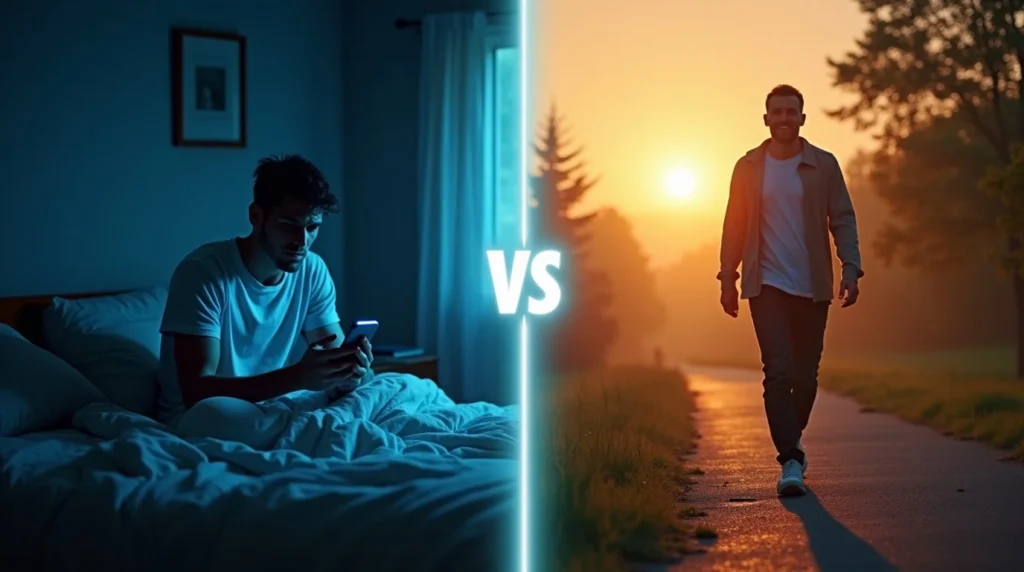
When we scroll before we move, our mind feels slow and heavy. But when we move before we scroll, something changes. You feel freedom in your head. You feel sharper. You feel in control of your day. You feel more alive. This small rule slowly helps you reduce screen time without pressure. It feels natural, not forced.
Share this with your friends, family, cousins, office people — anyone who spends long hours on screens and wants a new start. And if you still feel confused, just drop a comment. We will talk, guide and help you figure it out.
And remember one strong thought before you leave: if every screen minute had a physical price, maybe we would finally understand how valuable our attention truly is.
You got this.
Move first and you will see how your heart feels lighter than any reel or video.
If you want to explore more about this, you can also read this wonderful and helpful guide.

[ Author ] – Safdar Khurshid researches and evaluates consumer electronic gadgets, including smartphones, laptops, accessories, and everyday tech products, with a strong focus on long term usability, real world performance and buying mistakes people often regret later. His work is centered on helping readers understand trade offs clearly, so they know not just what to buy but also what to avoid.