
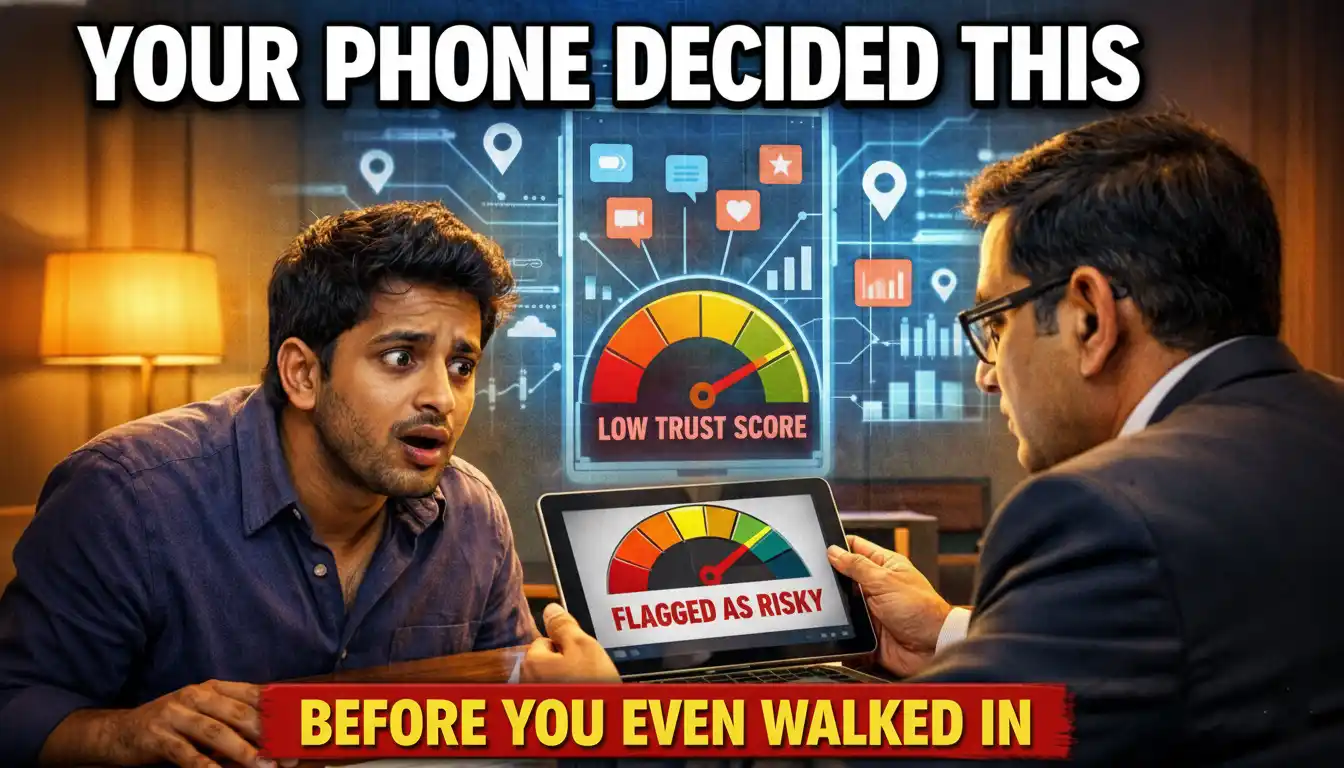

You applied for a personal loan last month. You had a steady income. You had no major debts. You thought you ticked every box. They still said no.
What you did not know is that before a human even looked at your application, an algorithm had already quietly gone through your phone score data and decided something about you. Your app usage patterns. Your location history.
The times you opened certain apps. The neighborhoods you visited. The way you spent your money digitally. All of it fed into a score you never knew existed about you.
Phone data scoring system India jobs loans is not something being planned for the future. It is already running quietly in the background of India’s fintech and hiring ecosystem right now.
And honestly, i think most Indians have absolutely no idea how far this has already gone.
TOC
What This System Actually Is and How It Works
To start with, let me explain what is actually happening in plain language.
Traditional credit scoring in India uses your CIBIL score which is based on your loan repayment history, credit card usage and banking behavior. But hundreds of millions of Indians have little or no formal credit history. They are invisible to the traditional system.
Since these people exist outside the formal banking system, a new category of companies saw an opportunity. If traditional data does not exist, use behavioral data instead. And the most detailed behavioral dataset available on any Indian is sitting right inside their smartphone.
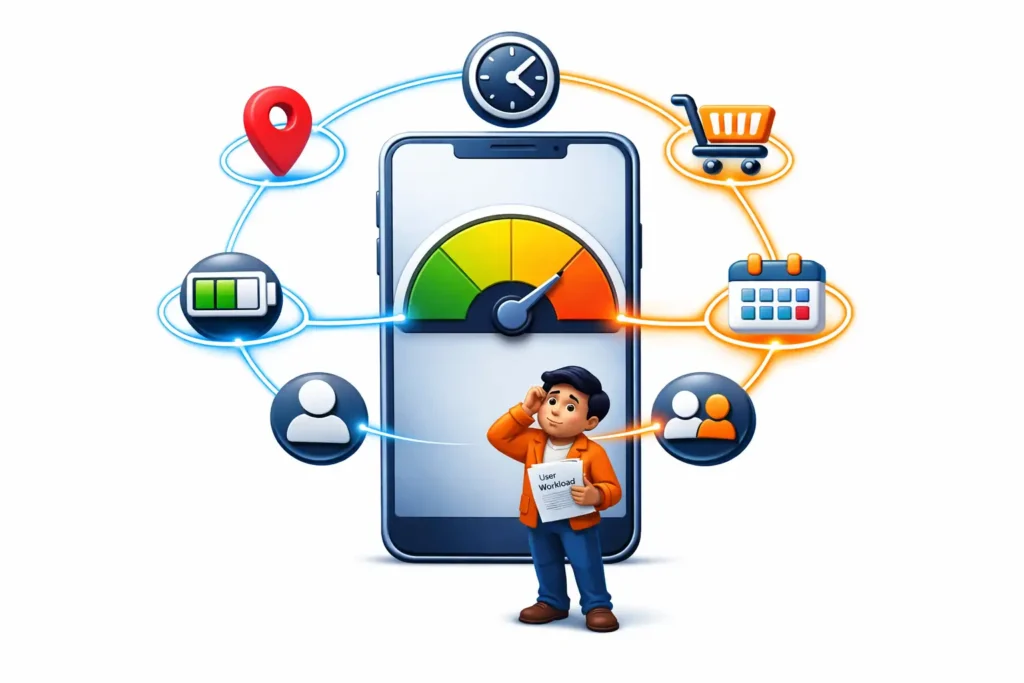
App usage patterns creditworthiness India is a real and growing field. Fintech companies and alternative lenders analyze which apps you have installed on your phone, how often you use them and at what times. A person who opens a gambling app daily is scored differently from someone who opens a financial planning app.
Someone who uses food delivery apps at 2am on weekdays is scored differently from someone who orders groceries on Sunday mornings. These behavioral signals are treated as proxies for financial responsibility and lifestyle stability.
I personally find this deeply unsettling. Because it means that decisions with serious life consequences, whether you get a loan, whether you can rent a house or whether you pass a background check, are being made based on behavioral inferences that you never consented to share and that you almost certainly do not know are being collected.
The Companies Already Doing This Quietly in India
This is not theoretical. Several companies are already operating in this space in India right now.
Digital trust score India lending companies like CreditVidya, Perfios and several others have built alternative credit assessment models that use smartphone data as a primary input. Some of these companies partner directly with banks and NBFCs to provide behavioral credit scores on applicants who have thin or no traditional credit files.
The data points they use go far beyond what most people would expect. Location history used for loan approval India is a documented practice. If your location data shows you frequently visit your workplace consistently, that is a positive signal.
If your location patterns are erratic and unpredictable, that is flagged as a risk factor. If you frequently visit certain neighborhoods that are associated with financial distress, that data influences your score.
Beyond location, spending behavior through UPI transactions, the device you own, how full your phone storage is, how many contacts you have and even the battery health of your phone have all been cited in research and documentation from alternative credit scoring companies as input variables.
I think about this and I realize that something as simple as having a cluttered phone with low storage could, in some models, work against your loan application. That is the level of granularity we are talking about.
The Social Credit System India Smartphones Connection
To be precise, I want to address the obvious comparison directly and honestly.
Social credit system India smartphones is a phrase that makes many people immediately think of China’s controversial social credit system. And while India’s emerging behavioral scoring ecosystem is not a government run program, the practical effect on individual lives shares some uncomfortable similarities.
In both cases, everyday behaviors that a person considers entirely private are being monitored and converted into a score that affects access to financial and social resources. In both cases, the person being scored has limited visibility into what data is being used, how the score is calculated or how to challenge an unfavorable result.
The difference is that in India this is being driven by private companies rather than the state. But from the perspective of the person being scored, that distinction may offer less comfort than it sounds.
What This Means for Your Life Right Now Today
You are already being scored. Right now. Whether you know it or not. Whether you consent or not. Every app you open, every place your phone travels with you, every digital transaction you make is potentially being fed into a system that generates an assessment of your trustworthiness as a borrower, a tenant or an employee.
Since most Indians carry their phone with them everywhere from the time they wake up to the time they sleep, the behavioral dataset being generated about each person is extraordinarily detailed.
Over time, phone data scoring system India jobs loans systems become more accurate, more influential and more deeply embedded in the decisions that shape your life.
And right now, today, there is no regulation in India that requires these companies to tell you that this scoring is happening, to show you your score or to give you a meaningful way to challenge it.
What You Can Actually Do About Phone Score Data
To be honest, fully opting out of this system while living a normal digital life in India is, by now, basically impossible. But there are meaningful steps you can take to reduce your exposure and protect yourself.
First, audit your app permissions regularly. Many alternative credit scoring apps access your phone data through permissions granted to loan apps or financial service apps that you installed. Go through your installed apps one by one and revoke permissions that seem unnecessary for that app’s core function, especially location, contacts and storage access.
Second, be aware of what loan apps you install. Some instant loan apps in India are specifically designed to harvest phone data as their primary business model rather than actually providing financial services. Before installing any financial app, research the company behind it and read what data permissions it requests on installation.
Third, maintain consistent digital behavior. Since app usage patterns creditworthiness India systems reward consistency and penalize erratic behavior, simply being consistent in your daily digital habits, regular working hours, consistent location patterns, stable financial app usage, can work in your favor even within systems you cannot fully control.
Finally, stay informed. This space is moving extremely fast and the regulatory environment in India around digital privacy and alternative credit scoring is actively evolving. The Digital Personal Data Protection Act passed in 2023 may eventually provide some protections in this area but implementation is still ongoing.
The Ground Is Already Shifting
To wrap up, phone data scoring system India jobs loans is real, it is already operating and it is already affecting real Indians in ways they are completely unaware of.
The most uncomfortable truth about all of this is not that the technology exists. It is that it is already making consequential decisions about your life, your access to credit, your housing options and potentially your employment, based on data you generated without knowing it was being collected for this purpose.
Your phone has always felt like your most personal device. The one thing that is completely yours. What we are discovering, one system at a time, is that it was never quite as private as it felt.

[ Author ] – Safdar Khurshid researches and evaluates consumer electronic gadgets, including smartphones, laptops, accessories, and everyday tech products, with a strong focus on long term usability, real world performance and buying mistakes people often regret later. His work is centered on helping readers understand trade offs clearly, so they know not just what to buy but also what to avoid.