

You picked up your phone to watch one reel. Just one. And suddenly it is 47 minutes later and you have no idea where the time went. Honestly, i think most of us have been there. I have personally lost entire evenings to this exact trap without even realizing it was happening to me.
But here is the thing. That was not your fault. And it was definitely not a coincidence. Short video algorithm addiction in India is not a side effect of these apps. It is the main product.
It is working exactly as designed. And once you understand how it works, you will literally feel it happening to you in real time the next time you open Instagram or YouTube.
TOC
What the Algorithm Is Actually Doing to Your Brain
To start with, let me explain something called the dopamine loop.
Dopamine is basically the chemical your brain releases when something feels good. A funny video gives you a small dopamine spike. A satisfying video gives you another one. Your brain starts associating scrolling with that good feeling and, over time, it starts craving more of it. Day by day, that craving gets stronger.
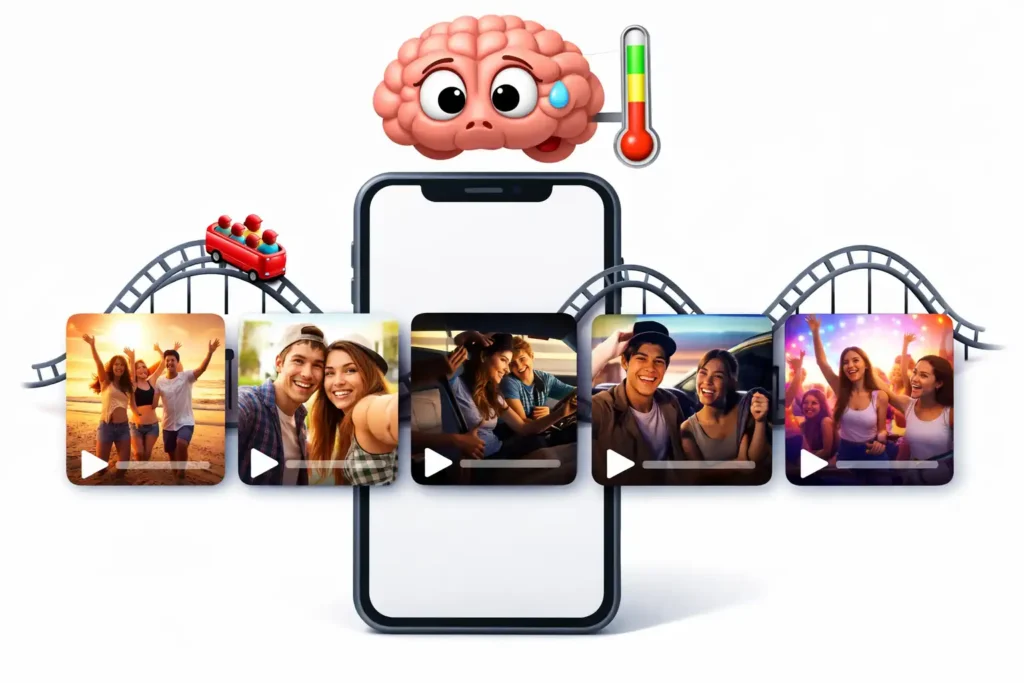
Now here is where it gets seriously interesting. The algorithm does not just feed you good content back to back. Actually, that would make you feel satisfied and put your phone down. Instead, it deliberately places one slightly negative, uncomfortable or anxious video right between positive ones. A news clip about something scary. A video that triggers mild comparison or insecurity. Something that makes you feel just slightly uneasy.
I personally noticed this happening on my own feed. One funny reel, one feel good video and then suddenly one video about something worrying. And I kept scrolling because somewhere my brain was searching for that next good feeling to balance out the bad one.
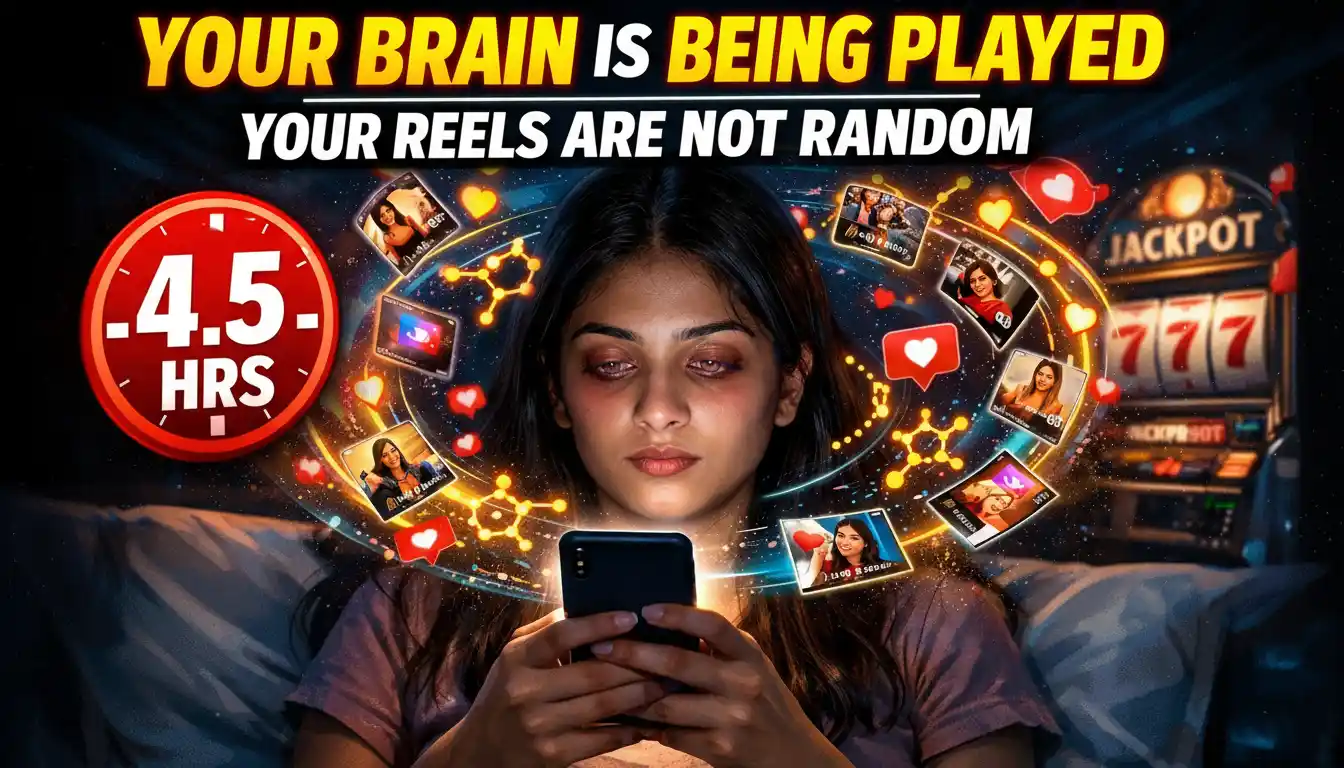
That is not random. That is a documented behavioral technique called variable reward scheduling. The same psychological trick used in slot machines in casinos.
Your dopamine levels stay unstable on purpose because an unstable dopamine state keeps you scrolling far longer than a satisfied one ever would.
How Short Video Algorithm Works on Your Brain Step by Step
To be clear, this is not a conspiracy theory. This is documented behavior by researchers who have studied these platforms in detail.
Step by step, here is exactly what happens. You open the app. The first few videos are things you genuinely enjoy. Your brain feels good. Then one slightly uncomfortable video appears. Your dopamine dips just a little. Your brain gets mildly anxious. You scroll past it fast. The next video is positive again. Your brain gets relief. That relief feels even better because of the dip that came just before it.
This cycle repeats, over and over, without warning, without you noticing and without you consciously choosing it. Before long you are 45 minutes deep and still scrolling because your brain is chasing that next relief hit.
I think this is honestly one of the most disturbing things I have learned about how these apps actually work. Because it means every single time you open Reels or Shorts, you are sitting down at a slot machine that has been perfectly calibrated to your specific emotional triggers.
The India Numbers Make This Even More Alarming
Here is something that probably will not surprise you but should still make you stop for a moment. Indians average 4.5 hours daily on short video apps. That is more than the global average by a significant margin.
Since most Indians got their first smartphone in the last five to seven years, the algorithm has had plenty of time to learn exactly what content triggers each individual user the most.
By now, that algorithm knows you better than most people in your life do. It knows what makes you laugh, what makes you anxious, what makes you feel insecure and what keeps you scrolling at 1am when you should be sleeping.
As a result, the dopamine loop Instagram Reels and YouTube Shorts create for Indian users is, in many cases, more powerful than it is for users in other countries simply because screen time here is so high and the data pool is so deep.
To make matters worse, the more you use it, the more accurate it gets. Over time, it needs less and less effort to keep you hooked.
You Will Notice It Happening After Reading This
Here is what I genuinely believe is the most valuable thing about understanding how reels algorithm works on your brain. Once you know the trick, you start seeing it. Next time you are scrolling and one slightly uncomfortable or anxious video appears in your feed, you will catch it.
You will feel that tiny dopamine dip. And you will recognize it for exactly what it is. A deliberate placement designed to keep you scrolling. That awareness does not automatically fix the habit. But it is the first step.
In reality, most people who struggle to stop short video addiction on their phone are not struggling because they have no willpower. They are struggling because they do not realize they are playing a game that was specifically designed for them to lose.
How to Actually Take Back Some Control
To sum up, here is what actually helps in practice.
Set a screen time limit on your phone for Instagram and YouTube right now, today. Not tomorrow. Today. On Android go to Digital Wellbeing in Settings. On iPhone go to Screen Time. Set a daily limit of 30 to 45 minutes and make it require a passcode to override so you cannot just tap ignore and keep going.
Besides that, the next time you feel that slight anxious or uncomfortable feeling mid scroll, stop right there. Put the phone face down for two minutes. That moment of discomfort you feel is your dopamine stabilizing. Let it.
From now on, every time you pick up your phone to watch one reel, at least you will know exactly what is waiting for you on the other side of that screen. And knowing is, without question, more powerful than you think.
Short video algorithm addiction in India is real, it is documented and it is running on your phone right now. The question is simply whether you are going to keep letting it run you too.

[ Author ] – Safdar Khurshid researches and evaluates consumer electronic gadgets, including smartphones, laptops, accessories, and everyday tech products, with a strong focus on long term usability, real world performance and buying mistakes people often regret later. His work is centered on helping readers understand trade offs clearly, so they know not just what to buy but also what to avoid.